Insights
WORLD ANTI-CORRUPTION DAY 2025

Reclaiming Integrity: Lessons from UNCAC, Nigeria’s Struggle, and the Legacy of the MacArthur Foundation’s “On Nigeria Project.”
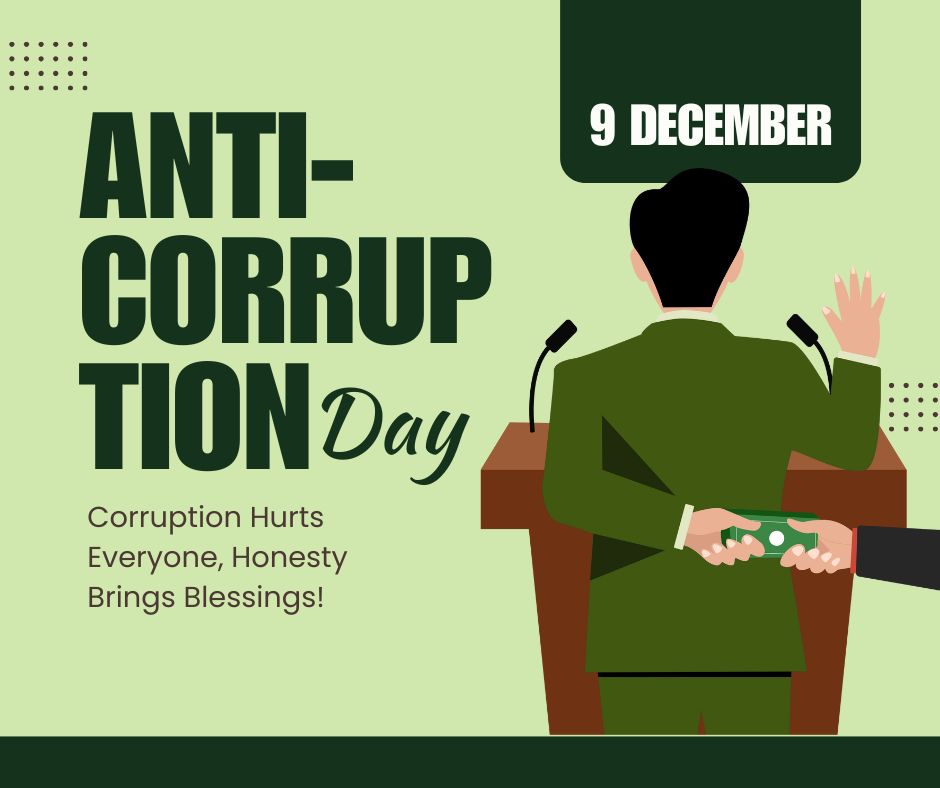
Every year on 9th December, the world pauses to observe International Anti-Corruption Day, a date designated by the United Nations in 2003 to raise awareness about the danger corruption poses to governance, development, and human dignity. The date commemorates the adoption and opening for signature of the United Nations Convention Against Corruption (UNCAC) – the first and still the only universal, legally binding anti-corruption treaty in history.
More than two decades later, UNCAC has evolved into a global moral compact. It affirms that corruption is not a local inconvenience or cultural flaw; it is a systemic threat that destroys justice, undermines human rights, distorts elections, destabilizes states, and robs citizens of opportunities. The annual commemoration is therefore not symbolic; it is a call to governments, civil society, media, and citizens to recommit themselves to the values of integrity, transparency, and accountability.
Nigeria, which signed UNCAC in 2003 and ratified it in 2004, stands today at a critical junction in this global movement.
Nigeria’s Continuing Anti-Corruption Paradox
Nigeria entered the UNCAC era with high aspirations. Institutions like the EFCC (2002) and ICPC, the Code of Conduct Bureau, the Bureau of Public Procurement (BPP), and public-service reforms represented structural attempts to create a national architecture of accountability. Over the years, additional tools such as the Treasury Single Account (TSA), whistle-blowing policies, financial reporting reforms, and procurement oversight mechanisms were adopted.
Yet, despite these frameworks, Nigeria continues to struggle with rampant public-sector corruption; weak enforcement culture; institutional capture by political interests; opacity in procurement and budgeting; judicial compromise; poor service delivery; and massive illicit financial flows.
The contradiction is stark: Nigeria possesses one of the most robust anti-corruption legal frameworks in Africa, yet corruption remains systemic, normalized, and corrosive.
The issue is not the absence of laws – it is the absence of political will, institutional independence, and civic cultural transformation.
Why Anti-Corruption Efforts Fail – and What Must Change
The Nigerian experience shows that corruption persists because reforms often focus on structures but not culture, arrests but not prevention, agencies but not autonomy, policies but not political commitment, and rhetoric but not consistency.
The cost of this dysfunction is monumental: collapsed social services, weakened security, distorted public finance, destroyed investor confidence, entrenched poverty, and rising disillusionment among citizens.
Anti-corruption is therefore not merely a governance duty – it is an existential necessity for the Nigerian state.
This is why international cooperation, independent media, active civil society, and community-level accountability movements have become indispensable pillars of reform. The UNCAC framework continues to remind nations that corruption is both a domestic crime and an international problem, requiring cross-border cooperation, transparency in financial flows, and societal transformation.
This brings us to one of the most impactful non-government interventions in Nigeria’s accountability landscape: the MacArthur Foundation’s “On Nigeria” Big Bet (2016–2024).
The MacArthur Foundation’s “On Nigeria Project”: A Transformative Legacy (2016–2024)
The MacArthur Foundation’s On Nigeria initiative stands as one of the most ambitious philanthropically driven anti-corruption investments in Nigeria’s history. Designed as a time-bound “Big Bet”. Its goal was simple but profound: reduce corruption by strengthening transparency, accountability, and participatory governance.
The project’s strategic “voice + teeth” approach meant empowering citizens and media (“voice”) while supporting institutional reforms and justice actors (“teeth”). It awarded 340 grants to 135 organizations through which US$154.1 million was invested. The project’s integration of inclusion of gender equity, youth, marginalized groups, and its focus on sustainability was phenomenal.
The project made key achievements in five major areas. On the Independent Media and Investigative Journalism cluster, MacArthur’s support revolutionized investigative journalism in Nigeria. This was achieved through funding for dozens of media outlets, including local-language platforms; training journalists, especially youth and women, in data journalism and corruption reporting; strengthening fact-checking and media sustainability models; and triggering nationwide investigative stories that led to sanctions, service improvements, and public outcry. This has impacted Journalism, becoming a stronger watchdog, shining light into corrupt spaces that once thrived in darkness.
On the Criminal Justice Reform and Strengthening Institutions cluster, the project’s initiative strengthened law enforcement and justice systems through nationwide advocacy and monitoring of the Administration of Criminal Justice Act (ACJA) implementation; building the capacity of courts, prosecutors, and legal professionals; and supporting civil society to track case timelines, monitor courts, and demand accountability. The impact has been a more coherent enforcement framework, improved case management, and heightened demand for justice sector accountability.
On the Citizen Mobilization and Social Accountability cluster, the project directly supported community-based and civil-society accountability campaigns. These included grassroots engagement through the Joinbodi cohort and similar initiatives; community monitoring of public services and procurement; increased transparency; and responsiveness in sub-national institutions (though varying by state), and strong integration of gender and social inclusion. The impact is that the citizens moved from passive observers to active demand-makers – strengthening Nigeria’s accountability culture from below.
On the Behaviour Change, Norm Shifts, and Civic Education cluster, the project realized that laws alone cannot defeat corruption, it invested in faith leaders, artists, influencers, and opinion-shapers; civic education campaigns; andanti-corruption storytelling and behavioural-change communication. The impact here is raising social consciousness that corruption harms everyone – and that integrity is a collective responsibility.
On Building a Durable Anti-Corruption Ecosystem, the Project – through its cohort – cultivated networks of civil society groups; collaboration between media, communities, and justice actors; strategic alliances; and a knowledge base for future reforms. Even though the MacArthur Foundation’s On Nigeria Project ended in 2024, the ecosystem remains alive – including ARDP’s own continued work on social accountability, budget tracking, community monitoring, and civic engagement.
The Nigerian Challenge: Beyond Projects, Toward Systemic Change
Despite the significant contributions of the On Nigeria Project, Nigeria’s corruption crisis is not over because political capture undermines institutional independence; anti-corruption agencies are often weaponized; judicial processes are slow, opaque, and susceptible to influence; budgeting and procurement remain vulnerable to manipulation; social norms still tolerate “survival corruption”; and citizens lack consistent platforms for collective action.
The lesson is clear: anti-corruption cannot succeed without systemic reform.
Projects and policies matter.
Institutions matter.
International conventions matter.
But political will, social pressure, and cultural change matter even more.
The Way Forward: Reimagining Nigeria’s Integrity Architecture
To move Nigeria from symbolic anti-corruption to substantive accountability, the following priorities are urgent:
- Strengthen institutional independence. EFCC, ICPC, CCB, and the Auditor-General must operate without political interference.
- Reform public procurement and budgeting.Transparency must become the default, not demand-driven.
- Deepen judicial integrity. Without trustworthy courts, anti-corruption collapses.
- Expand citizen-driven accountability.Community monitoring platforms like ARDP’s work must be scaled nationally.
- Strengthen media freedom. Investigative journalism must be protected and sustainably funded.
- Address political financing corruption.Opaque campaign financing is the gateway to state capture.
- Embed values and civic ethics.Anti-corruption must be a cultural norm, not a bureaucratic slogan.
World Anti-Corruption Day is a reminder that corruption is not destiny. It is a human choice – and thus within human power to reverse.
UNCAC provided the world with the architecture, Nigeria built institutions, and the MacArthur Foundation’s “On Nigeria Project” expanded civic capacity, investigative journalism, and justice reform. Organizations like ARDP continue to deepen community accountability.
Yet corruption persists – not because the tools are absent, but because the moral, cultural, and political will to use them consistently is weak.
The task ahead is to transform anti-corruption from an occasional campaign into a national ethos, a collective commitment that binds leaders and citizens alike.
If Nigeria is to fulfill the promise of 9th December – not once a year but every day – then integrity must become our civic identity, and accountability must become a condition of public trust.
This is the unfinished work before us. And it begins now.