Insights
When Security Meets the Constitution

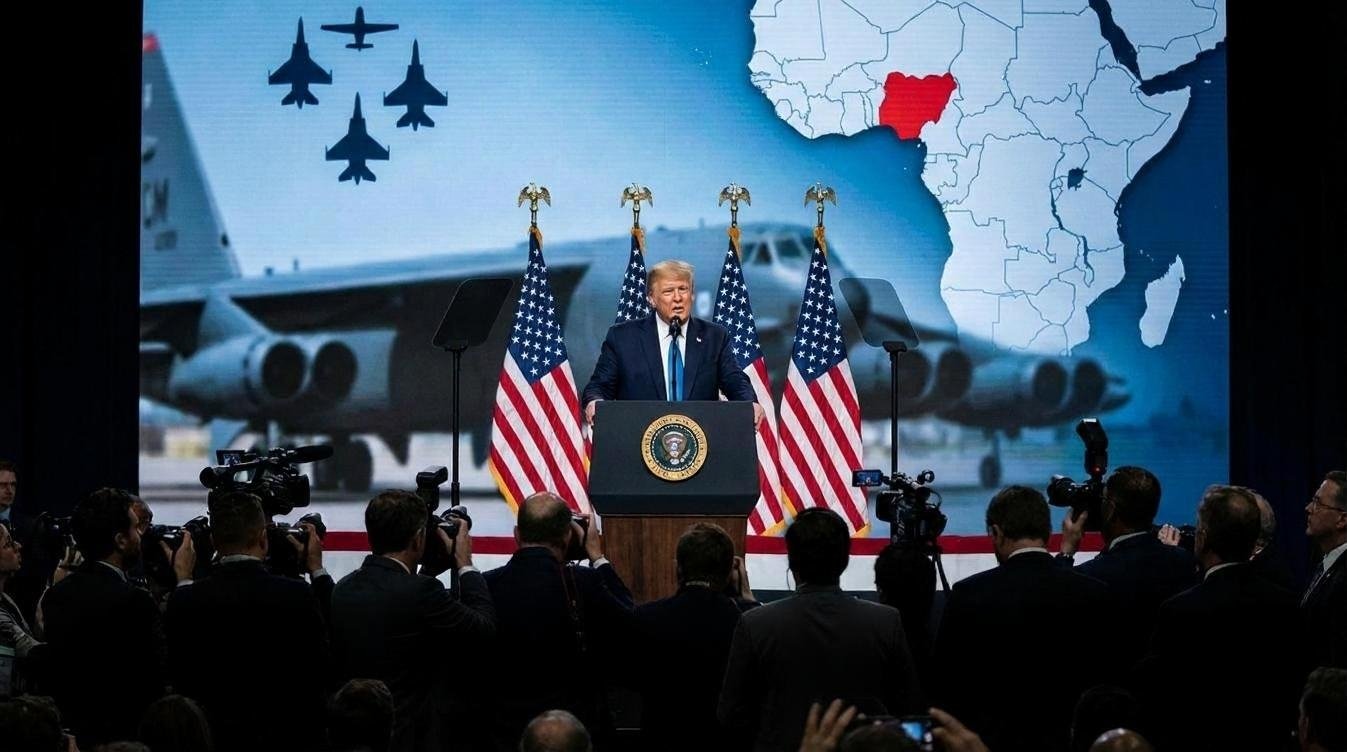
U.S. Airstrikes and the Future of Nigeria’s Sovereignty, Democratic Oversight, and National Security.
Policy Analysis | December 2025
By Arewa Research & Development Project (ARDP)
Nigeria stands at a defining governance crossroads.
Recent reports of United States airstrikes targeting terrorist elements within Nigerian territory have generated public debate that extends far beyond counter-terrorism operations. These developments raise fundamental questions about Nigeria’s constitutional order, democratic accountability, sovereignty, and the long-term coherence of its national security strategy.
At ARDP, we approach this issue from a foundational principle: national security effectiveness, constitutional legitimacy, and democratic oversight are not competing values—they are mutually reinforcing pillars of a stable republic.
Security Cooperation Is Necessary—But Governance Is Non-Negotiable
Nigeria faces an evolving security environment shaped by insurgency, banditry, and transnational criminal networks. International security cooperation has therefore become an important element of national defense strategy.
However, foreign-executed kinetic military action represents a qualitatively different level of engagement. Unlike training, intelligence sharing, or advisory support, airstrikes conducted by external forces intersect directly with constitutional governance, civil–military relations, and Nigeria’s long-standing sensitivities around sovereignty.
The central issue is not whether terrorism must be confronted—there is no ambiguity on that. The critical question is whether the manner of confrontation strengthens or weakens Nigeria’s constitutional and institutional foundations.
Constitutional Authority Must Be Visible
Nigeria’s 1999 Constitution vests command of the armed forces in the President, but that authority exists within a system of legislative oversight, civilian supremacy, and accountability. The deployment of force—especially where foreign military actors are involved—is among the most consequential exercises of state power.
In constitutional democracies, such actions are typically governed by:
- clearly articulated legal instruments,
- legislative notification or approval, and
- structured post-operation oversight.
Where these frameworks are opaque or absent from the public record, constitutional balance is strained, even if executive coordination has occurred. Ambiguity itself becomes a governance vulnerability.
Tactical Success Does Not Equal Strategic Effectiveness
While externally supported air operations may deliver short-term tactical gains, sustainable counter-terrorism depends on nationally owned command structures, institutional learning, and strategic coherence.
Security partnerships are most effective when they enhance domestic capacity rather than substitute for it. Over-reliance on externally executed force risks eroding institutional confidence, weakening accountability within the military chain of command, and creating dependency patterns that undermine long-term security resilience.
Sovereignty Is About Control, Not Isolation
Modern sovereignty is not defined solely by the absence of foreign presence. It is defined by the state’s ability to authorize, control, and account for the use of force within its territory.
For Nigeria—a regional leader within ECOWAS and the African Union—ambiguity surrounding foreign kinetic action carries diplomatic and normative consequences. It shapes regional expectations, affects Nigeria’s strategic credibility, and influences how international partners perceive Nigeria’s autonomy.
Civilian Protection Is Central to National Security
In conflict-affected regions already burdened by displacement and trauma, airstrikes carry risks that extend beyond immediate casualties. Civilian harm includes fear, livelihood disruption, psychological trauma, and erosion of trust between communities and the state.
Where foreign forces are involved, accountability pathways can become blurred, creating an “accountability vacuum.” Counter-terrorism strategies that fail to integrate transparent civilian-harm mitigation, community engagement, and grievance-redress mechanisms risk reinforcing the conditions that sustain insurgency.
Democracy Requires Transparency, Not Silence
Security policy does not operate in a political vacuum. In a plural and sensitive society, opacity in security governance creates fertile ground for misinformation, sectarian narratives, and extremist propaganda.
Democratic resilience requires not only operational success, but visible adherence to constitutional norms and credible communication with citizens. Silence or institutional ambiguity weakens public trust and cedes narrative control to non-state actors.
Why Ambiguity Is a Strategic Risk
Ambiguity is not neutral—it is corrosive. When extraordinary security measures occur without visible legal articulation or oversight, precedent quietly replaces law. Over time, this erodes democratic accountability, weakens institutions, and undermines Nigeria’s sovereignty from within.
Nigeria’s security challenges cannot be addressed sustainably through force alone. They require governance structures that command public confidence and withstand constitutional scrutiny.
ARDP’s Position
The reported U.S. airstrikes represent a defining governance moment. Nigeria’s test is not whether it can deploy force, but whether it can do so in a manner that strengthens constitutional governance, preserves public trust, and secures long-term national stability.
Lasting security is inseparable from legitimacy. Power anchored in law, oversight, and public accountability remains the strongest foundation for peace.